
Choose flap discs by the workpiece, geometry, grit progression, operating conditions and required finish.
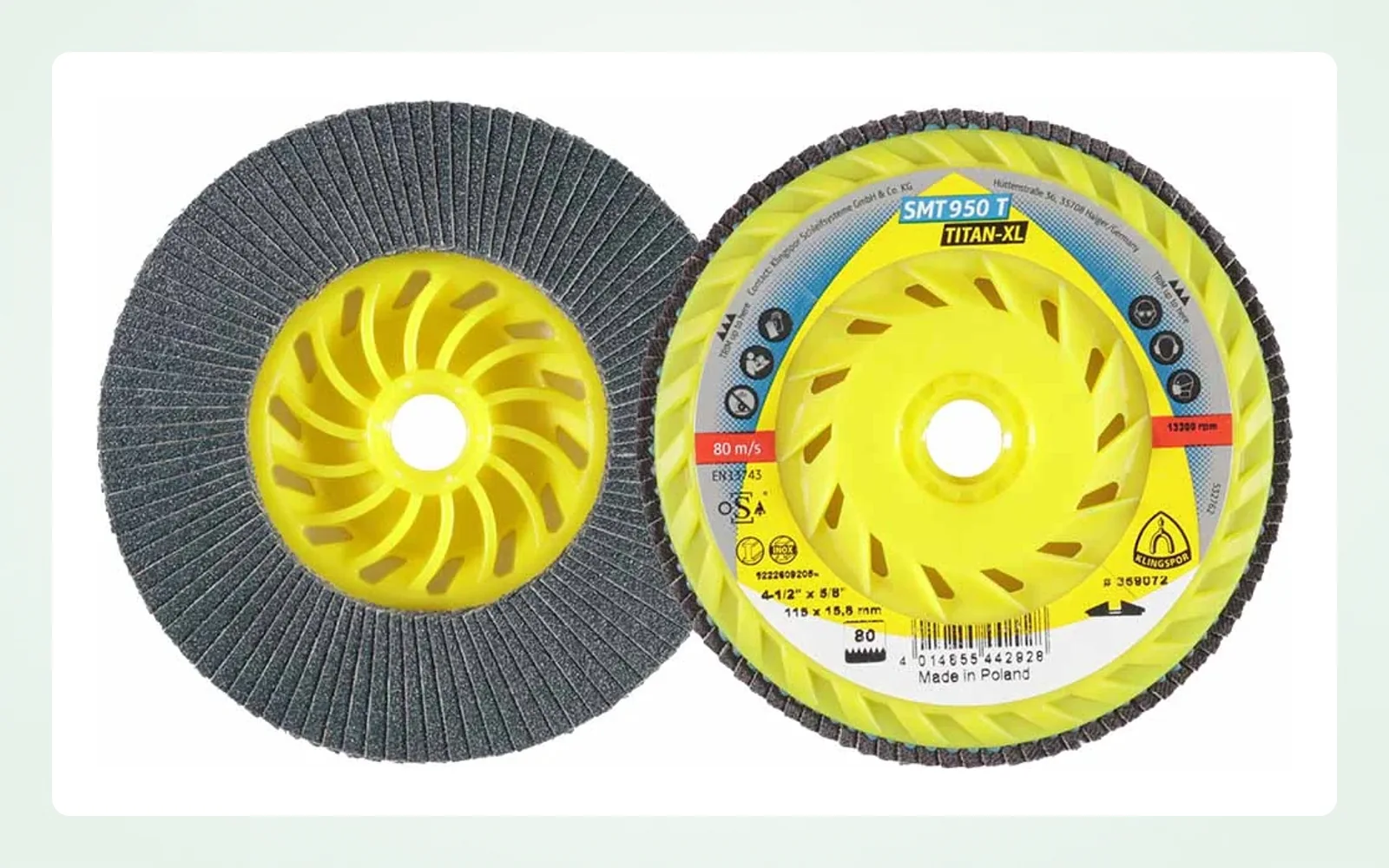
Pressure changes the scratch pattern and removal rate of a flap disc; it does not change its rated grit. Same disc, same abrasive. The only thing that changed was pressure.
That surprises a lot of buyers, and it explains why flap disc selection goes wrong so often. People shop by grit number as if it were a final grade. It is not. Grit is one variable in a system of four: the job, the shape, the grit, and the hand on the grinder. Get the system right and the disc does what the catalog promised.
Start with the job, not the disc
3M draws a clean map that belongs on every shop wall. Three tools, three jobs. The flap disc owns finish and refinement. The fiber disc owns removal speed. The grinding wheel owns working life.
Most selection mistakes are really category mistakes: grabbing a flap disc to hog off stock, then blaming the disc for wearing out fast. Norton calls the flap disc the fastest-growing abrasive category in metalworking over the past decade, precisely because one disc can grind, deburr, and finish. But "can do" is not "best at." When the job is bulk removal, start with the fiber disc or the wheel, then hand the finish to the flap disc. That sequence alone fixes half the complaints we hear.
Shape before grit
Flap discs come in two shapes, and the shape decides where the disc is allowed to work.
Type 27 is flat. It runs best on flat surfaces and wide areas, and it is the shape to reach for when the finish matters. Type 29 is conical. It gets into curves, edges, fillets, and weld toes that a flat disc can only skate across. As a rule of thumb from the trade press, flat Type 27 discs pair with 60 grit and finer for finishing work, while the conical shape does the contour jobs.
The working angle matters as much as the shape. Run the disc at roughly 15 to 25 degrees to the workpiece and let the flaps sweep. Lay it flat and you grind on the backing edge. Stand it steep and you gouge. The angle is not a footnote in a manual. It is the difference between the abrasive cutting and the disc dying young.
Grit is a progression, not a verdict
Inside the flap disc family, grit runs from aggressive to refined, and each step has a job:
- 60 grit: weld blending, heavy deburring, fast stock removal where the finish comes later.
- 80 grit: general-purpose grinding, the workhorse step.
- 120 grit: pre-finish, erasing the 80-grit scratch pattern.
- 180 to 320 grit: finish refinement, the steps that decide what the surface looks like under paint or polish.
Our FD range covers this full progression, 60 through 320, on the standard 100 by 16 millimeter disc, with plastic or iron backing covers to choose from. We stock the full range for one reason: skipping grits does not save time. Jumping from 80 to 320 buries 80-grit scratches under a 320-grit shine, and the only fix is going back.
Pressure is a setting, not a habit
This is the technique detail that opened the article. A flap disc cuts with light, steady pressure. Lean on it and three bad things arrive together: heat builds and discolors the work, the grains dull instead of fracturing sharp, and the flaps wear out in a fraction of their normal life.
The right feel is closer to guiding than pushing. Keep the disc moving, hold the angle, and let the weight of the grinder do most of the work. This can improve the finish from a given grit, without making it equivalent to another grit grade. The grains cut cleanly instead of being crushed into the surface.
The backing changes the feel
Two backing options, two personalities. The plastic cover runs lighter and more forgiving, a good default for finish work. The iron cover runs stiffer and more aggressive, suited to heavier grinding. Match the backing to the step the same way you match the grit. Aggressive job, stiffer setup. Finish job, forgiving setup.
One system, three steps
A flap disc is the middle of a finishing system, not the whole thing. When the coated abrasive has done all it can, the rest of the FD family takes over on the same grinder:
- Non-woven flap discs, in T27 and T29 shapes from 4 to 7 inches, blend and satin-finish. They erase the last directional scratches and leave the uniform matte that stainless work asks for.
- Wool flap discs and wool polishing wheels take it to the final polish.
Think of it as a ladder. The coated flap disc shapes the surface, the non-woven unifies it, the wool finishes it. Each step stays short because the previous one did its job.
Choose by the finish you want
| End goal | Shape | Grit path | Notes |
|---|---|---|---|
| Blend a weld flat | Type 29 | 60 → 80 → 120 | The conical shape reaches the weld toe; keep the last pass light |
| Prep a panel for paint | Type 27 | 80 → 120 → 180 | Flat shape keeps panels true; never skip a step |
| Stainless satin finish | Type 27, then non-woven | 120 → 180, then non-woven | Let the non-woven erase all directionality |
| Deburr and move on | Type 29 | 60 or 80 | One step, light hand, done |
One safety note
Every disc carries a maximum RPM rating printed on its label. Respect it. A 100 millimeter disc on a grinder that overspeeds it is not a shortcut. Check the rating before the disc goes on the tool, every time.
The takeaway
Stop shopping by grit number alone. Name the finish you want, pick the shape that can reach it, walk the grits in order, and keep your hand light. Do that, and the disc you already own will do better work.
Working on a finish you cannot quite hit? Message us with the material and the finish you are after, and we will map the sequence.
Sources behind this guide: Norton on flap discs as the fastest-growing abrasive category in metalworking; 3M's three-tool map (flap disc for finish, fiber disc for speed, grinding wheel for life); CTE Magazine, "Choosing Coated Abrasive Flap Discs" (Type 27 vs Type 29 guidance, 15–25° working angle). GUOWIN FD series parameters (grit range 60–320, 100×16 mm, plastic/iron covers, T27/T29 non-woven 4–7", wool polish) per GNOSIQ product table v1.1.