
Choose between grinding wheels and flap discs by geometry, removal and finish, then validate the sequence.
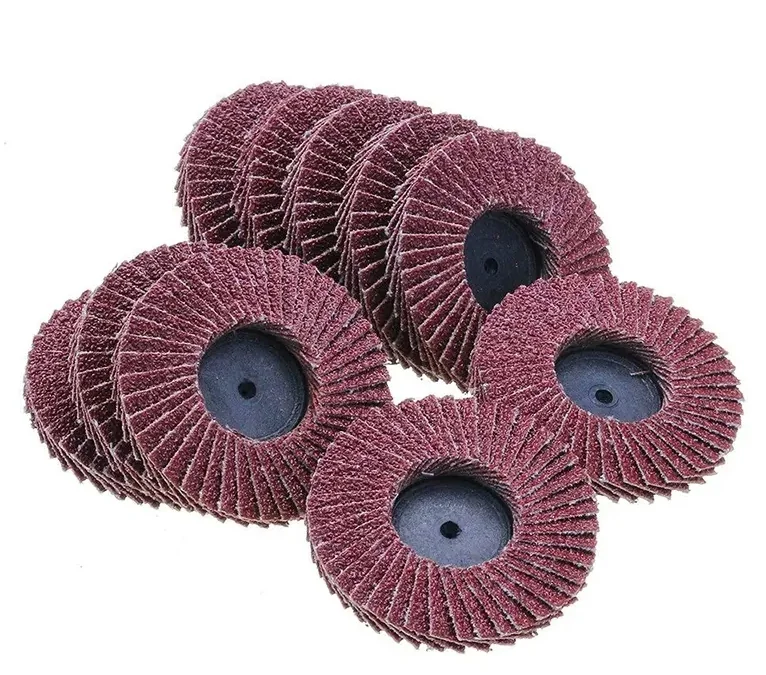
Answer first: On flat steel, a flap disc removes metal faster and leaves a cleaner surface, often in one step. For weld roots, tight corners and bevel cutting, a rigid grinding disc is the right tool because its hard edge can dig in. GNOSIQ GN-FD flap discs come in aluminum oxide, ceramic and zirconia grades.
Source question: "Cutting power of grinding Vs flap discs?", MIG Welding Forum, with roughly 20 detailed replies from working welders.
Where the debate started
A welder posted a blunt question on the MIG Welding Forum: he had never gotten much power out of grinding discs, suspected he was missing something, and asked when anyone would choose a grinding disc over a flap disc.
Twenty-odd experienced replies later, the picture is clear. The two discs are not doing the same job, so arguing about which is "stronger" misses the point entirely.
Why they are different: edge versus face
A grinding wheel is a rigid bonded-abrasive product. Its approved working surface and angle depend on the wheel type and manufacturer instructions; do not treat a grinding wheel as a cut-off wheel.
A flap disc is dozens of overlapping abrasive flaps bonded to a backing plate. You work with its face: flexible contact that rides the surface. As the flaps wear, fresh abrasive keeps exposing itself, which is why it moves fast and smooth across flat work.
Working angle depends on disc shape. Norton distinguishes T27 and T29 flap-disc angles; use the angle and working surface specified for the actual disc. Never grind on the edge of a flap disc.
Once you see edge versus face, every selection decision follows.
When to reach for the flap disc
Flat steel, heavy stock removal, weld blending. This was the closest thing to consensus in the thread: on flat surfaces a flap disc is much faster than a grinding disc, and the finish it leaves is clean enough to skip a separate dressing step.
Post-weld cleanup, paint and rust removal. Flap discs vibrate less and feel lighter. Several posters noted they now do most of their daily work with flap discs.
Ceramic flap discs when you want speed and finish together. Multiple veterans in the thread pointed out that ceramic-based flap discs cut close to a grinding disc while keeping the flap disc's surface quality. They cost more, and pressing too hard overheats the workpiece. Keep the disc moving and let the abrasive do the work.
One auto-body repair welder shared his working recipe: a 40-grit flap disc for stock removal, 80-grit for rough shaping, 100-grit for transitions. That is one shop's recipe, not lab data, but it is a sensible progression.
Where a suitable grinding wheel may help
Weld roots and tight corners. One poster put it well: a flap disc always leaves a radius in a corner and never reaches the root; a grinding disc's hard edge can be walked right into the joint. That is a structural fact. No abrasive upgrade gets around it.
Bevel preparation. Use a wheel and machine explicitly rated for that operation. A forum report of cutting a groove is not permission to use a grinding wheel for cut-off work, and does not establish weld penetration.
Heavy rust and scale. Grinding discs do not clog; flap disc flaps get packed with rust debris and go dull fast.
Thin sheet bodywork. Heat and distortion depend on pressure, dwell, abrasive, contact and sheet thickness. Validate on a representative scrap piece rather than assuming one wheel type always runs cooler.
A sequence that works
The most useful takeaway from the whole thread is not a choice but a sequence:
Knock down the weld crown with a grinding disc, blend with a ceramic or zirconia flap disc, transition at 80–100 grit, then unify the surface with a non-woven flap disc for a satin or brushed finish.
Non-woven abrasives are used here for controlled blending rather than heavy stock removal. It specializes in surface uniformity. That final step is what GNOSIQ's non-woven flap disc (GN-FD-NW47, T27/T29, 4–7 inch) is built for.
Choosing the abrasive: aluminum oxide, zirconia, ceramic
- Aluminum oxide (GN-FD-AO41): the economical choice, plenty for everyday carbon steel work.
- Zirconia (GN-FD-ZA45): self-sharpening, the workhorse for weld grinding, noticeably longer life than aluminum oxide.
- Ceramic (GN-FD-CA43): the most aggressive, best for stainless and high-volume production.
- Non-woven (GN-FD-NW47): surface blending and satin finishes.
- Wool (GN-FD-WL49A/B): final polishing. Final gloss depends on the incoming surface, compound, pad, machine and verified process.
Grit ranges for these models are pending factory confirmation; refer to the GNOSIQ official specifications when selecting.
Safety: two points people skip
First, match the RPM. Every grinding and flap disc is marked with a maximum RPM, and the angle grinder's no-load speed must not exceed it. Checking the label takes ten seconds.
Second, both grinding wheels and flap discs can fail if damaged, mismounted or misused. Keep the guard on, stand to the side, never in line with the rotation plane. That is shop law, not a suggestion.
The one-line selection rule
Flat, fast, clean surface: flap disc. For corners, roots and heavy scale, select a wheel approved for the geometry and operation. Most mature shops keep both on the shelf and switch by operation, not by brand loyalty.
Sources: MIG Welding Forum thread "Cutting power of grinding Vs flap discs?" (https://www.mig-welding.co.uk/forum/threads/cutting-power-of-grinding-vs-flap-discs.121646/); 15–25° flap-disc working angle per CTE Magazine industry guidance; GNOSIQ product data from the GNOSIQ customer product datasheet v1.0 and product table v1.1 (grit ranges pending factory confirmation); forum-user experience is shop experience, not laboratory test data.
Manufacturer safety guidance: https://www.nortonabrasives.com/en-us/resources/expertise/dos-and-donts-flap-discs ; https://www.nortonabrasives.com/en-gb/resources/expertise/rag-cutting-grinding