
Automotive refinishing & detailing
Choose for the stage of the job: local defect repair, scratch refinement or final polishing. Confirm the paint system, tool and acceptance method before selecting a product or grit sequence.
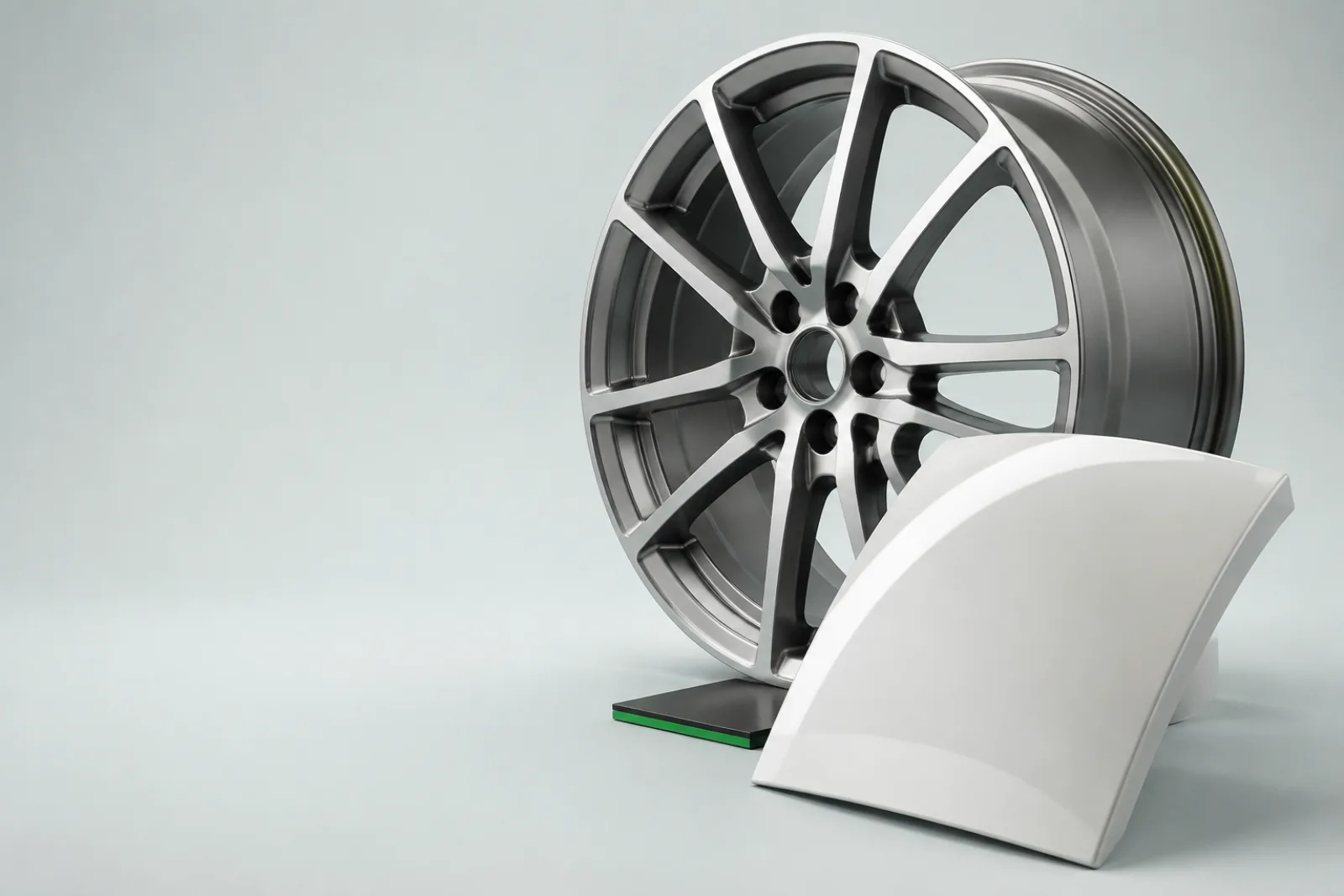
Separate the stages before choosing a consumable
This page covers repair and detailing of painted surfaces. For production metal parts, use the metal-parts route and define the manufacturing process separately.
| Process stage | Candidate product roles | What to confirm |
|---|---|---|
| Local paint-defect repair | SP for localized repair; VD for the appropriate sanding format. Consider SA only where contour contact and the model are suitable. | Defect type, working area, coating condition, permitted removal and tool attachment. |
| Scratch refinement | Review VD, SP or SA according to the incoming scratch pattern and the following process. | Previous abrasive, edges, wet/dry conditions and compatibility with the next polishing stage. |
| Final polishing | Review the relevant FD polishing contact tool with the machine and matching polishing medium. | Incoming surface, machine, pad, medium, temperature and agreed appearance check. |
Define the working limits first
Unknown coatings, deep substrate damage, safety-related parts or unclear allowable removal need technical review before a trial. This route does not prescribe a universal grit sequence or guarantee a finish.
Product series to review for this process
Practical knowledge for your next decision
Read the selection logic, then return to the product and conditions you need to confirm.
Wool, microfiber or foam?
Separate cutting and finishing stages before choosing a polishing contact tool.
Read the selection guideCompare polishing-pad cost beyond unit price
Check bonding, heat, useful life and rework within the same process and comparison period.
Read the selection guideWhen a sponge abrasive fits the job
Use geometry and removal needs to decide whether a flexible backing is the right starting point.
Read the selection guideFrom the first question to a documented trial
Use this preparation framework to structure a technical discussion. It is a trial method, not a published performance result.
Define the part
Material or coating, geometry, incoming defect and acceptance method.
Review product roles
Candidate construction, tool interface, previous and next process stages.
Compare on representative parts
Record the product, conditions, comparison method, repeat count and observed limits.
Confirm documents & supply
Check the exact model, document purpose, destination, quantity and supply terms.
Questions to resolve before sampling
Can one consumable cover sanding and final polishing?
Treat the stages separately. Match the contact construction to each task, then assess the transition and the complete sequence on a representative panel.
Which grit should I start with?
The answer depends on the defect, coating, permitted removal, tool and next stage. Share those conditions before choosing a starting grit; a product-series link alone is not a process specification.
What should I prepare for a useful trial?
Use the checklist below to record the incoming panel, proposed products, controlled conditions, acceptance method and repeated observations. Keep conclusions within the tested scope.
Prepare a useful sample discussion
Copy these headings into your trial brief. Mark unknown items as “to confirm”; do not guess a process parameter.
Workpiece & incoming condition
Material / coating; geometry; defect; photographs or drawing references without confidential details.
Tool & process
Machine; attachment; wet/dry conditions; current product; previous and next stages.
Target & comparison
Acceptance method; permitted removal; sample quantity; variables held constant; repeated observations.
Record & review
Model / batch; trial date; process settings; results and limitations; person responsible for review.
Preparation method, not a customer case. Product and process suitability remain subject to application-specific review.
Discuss your workpiece with GUOWIN
Share the material, current process, target finish and main issue. Mark unknown details as “to confirm” so the next technical discussion has a clear starting point.